

Blog
Normal Testosterone Levels for Men by Age (2026 Guide)

What’s a Normal Testosterone Level for Men?
Introduction
Testosterone is the primary male sex hormone and plays a crucial role in physical development, reproductive health, muscle growth, bone strength, mood, and overall well-being. Although both men and women produce testosterone, men have significantly higher levels. Understanding what constitutes a “normal” testosterone level is important because both low and high testosterone can affect health, quality of life, and long-term wellness.
Many men wonder whether their testosterone levels are normal, especially as they age or experience symptoms such as fatigue, reduced libido, or decreased muscle mass. However, testosterone levels vary widely depending on age, health status, lifestyle, genetics, and even the time of day. Therefore, interpreting a testosterone test requires considering more than just a single number.
This comprehensive guide explains normal testosterone levels in men, factors affecting testosterone, symptoms of low and high testosterone, testing methods, treatment options, and natural ways to maintain healthy hormone levels.
What Is Testosterone?
Testosterone is an androgen hormone primarily produced in the testicles. A small amount is also produced by the adrenal glands. Production is regulated by the hypothalamus and pituitary gland through a complex hormonal feedback system.
Testosterone is responsible for:
- Development of male reproductive organs
- Facial and body hair growth
- Deepening of the voice
- Muscle development
- Bone density
- Sperm production
- Sex drive (libido)
- Mood regulation
- Energy levels
- Red blood cell production
Testosterone begins increasing during puberty, peaks during early adulthood, and gradually declines with age.
What Is Considered a Normal Testosterone Level?
Testosterone is usually measured in nanograms per deciliter (ng/dL) in the United States.
Most laboratories consider the normal range for adult men to be:
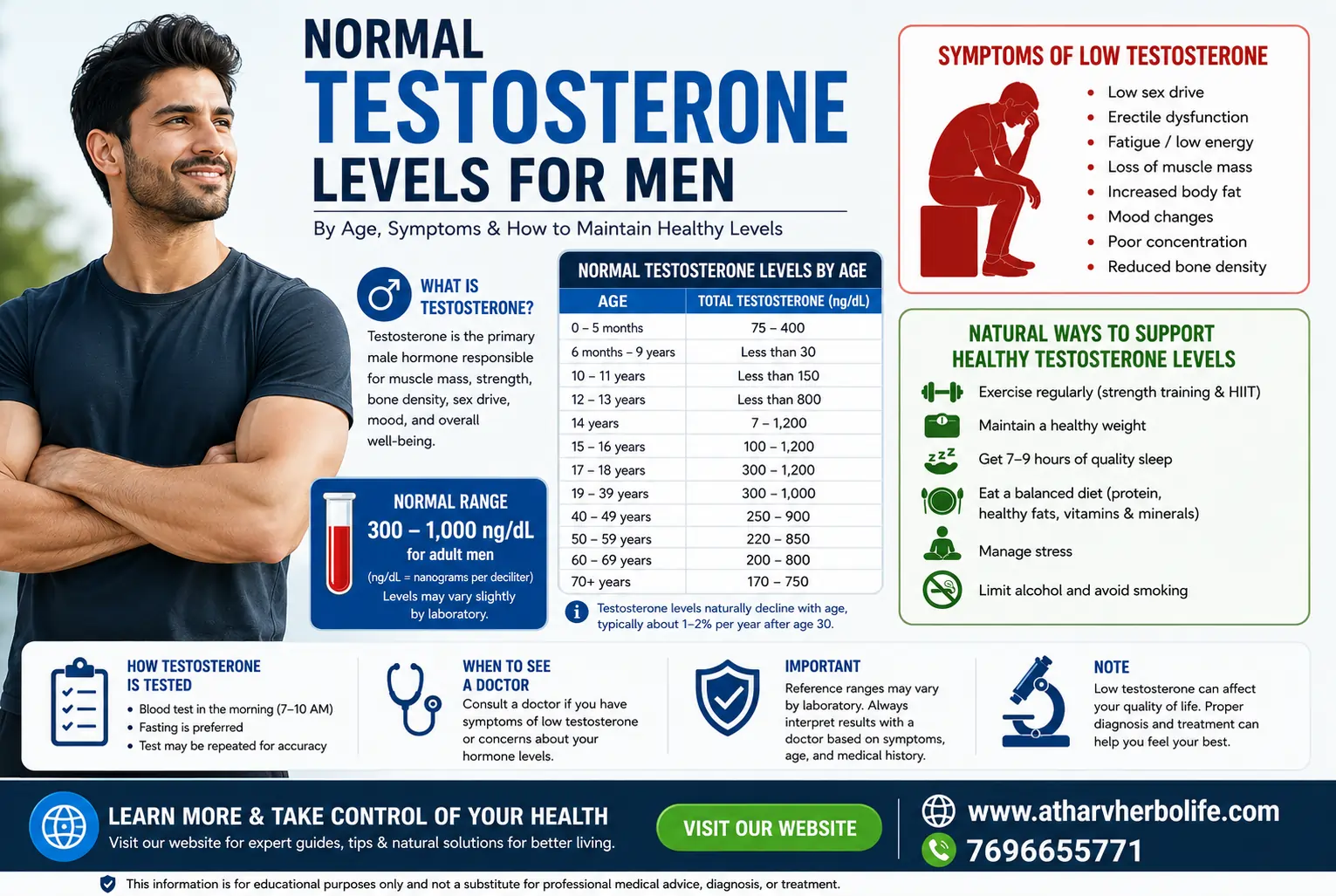
300–1,000 ng/dL
Some laboratories use a slightly different reference range, such as:
- 264–916 ng/dL
- 250–1,100 ng/dL
The exact range depends on the laboratory’s testing methods.
Most healthy young men have testosterone levels between 450 and 700 ng/dL, though healthy individuals may naturally fall outside this range.
Normal Testosterone Levels by Age
Testosterone naturally changes throughout life.
| Age | Typical Total Testosterone (ng/dL) |
|---|---|
| 0–5 months | 75–400 |
| 6 months–9 years | Less than 30 |
| 10–11 years | Less than 150 |
| 12–13 years | Less than 800 |
| 14 years | 7–1,200 |
| 15–16 years | 100–1,200 |
| 17–18 years | 300–1,200 |
| 19–39 years | 300–1,000 |
| 40–49 years | 250–900 |
| 50–59 years | 220–850 |
| 60–69 years | 200–800 |
| 70+ years | 170–750 |
These are approximate values. Many healthy older men have testosterone levels below those of younger men without experiencing symptoms.
Total Testosterone vs Free Testosterone
When testing testosterone, doctors often measure either total testosterone or free testosterone.
Total Testosterone
Total testosterone includes:
- Free testosterone
- Testosterone bound to albumin
- Testosterone bound to sex hormone-binding globulin (SHBG)
It is the most commonly ordered laboratory test.
Free Testosterone
Only about 2–3% of testosterone circulates freely in the bloodstream.
Free testosterone is the biologically active portion that enters cells and produces hormonal effects.
A man may have normal total testosterone but low free testosterone if SHBG levels are unusually high.
Typical free testosterone ranges are approximately:
- 50–210 pg/mL
Reference ranges vary by laboratory.
Why Testosterone Declines with Age
Beginning around age 30, testosterone levels gradually decline by approximately 1–2% per year.
Several factors contribute:
- Reduced testicular function
- Changes in pituitary hormone signaling
- Increased body fat
- Chronic illness
- Reduced physical activity
- Sleep disturbances
- Certain medications
Age-related decline is normal and does not necessarily require treatment.
Symptoms of Low Testosterone
Low testosterone, also called hypogonadism, occurs when the body does not produce enough testosterone.
Common symptoms include:
Sexual Symptoms
- Low sex drive
- Erectile dysfunction
- Reduced morning erections
- Infertility
- Reduced semen volume
Physical Symptoms
- Loss of muscle mass
- Increased body fat
- Reduced strength
- Low energy
- Chronic fatigue
- Decreased endurance
- Bone loss
- Hot flashes
Emotional Symptoms
- Depression
- Irritability
- Anxiety
- Difficulty concentrating
- Poor memory
- Reduced motivation
Not every symptom is caused by testosterone deficiency, which is why testing is important.
Causes of Low Testosterone
Several medical conditions can reduce testosterone production.
Common causes include:
Primary Hypogonadism
The testes cannot produce adequate testosterone because of:
- Genetic disorders
- Injury
- Chemotherapy
- Radiation therapy
- Infection
Secondary Hypogonadism
The pituitary gland or hypothalamus fails to stimulate testosterone production.
Causes include:
- Pituitary tumors
- Head trauma
- Certain medications
- Obesity
- Sleep apnea
Lifestyle Factors
Lifestyle also plays a significant role.
Examples include:
- Chronic stress
- Poor diet
- Alcohol abuse
- Drug use
- Lack of sleep
- Sedentary lifestyle
Symptoms of High Testosterone
High testosterone is less common and often results from:
- Testosterone replacement therapy
- Anabolic steroid use
- Certain adrenal disorders
- Rare tumors
Possible symptoms include:
- Acne
- Aggressive behavior
- Mood swings
- Increased red blood cell count
- High blood pressure
- Enlarged prostate
- Sleep apnea
- Infertility due to reduced sperm production
Naturally occurring high testosterone rarely causes significant health problems.
How Testosterone Is Tested
Doctors usually recommend testing:
- Early morning (7–10 AM)
- While fasting if possible
- On two separate occasions
This is because testosterone fluctuates throughout the day.
Testing may include:
- Total testosterone
- Free testosterone
- SHBG
- Luteinizing hormone (LH)
- Follicle-stimulating hormone (FSH)
- Prolactin
- Estradiol
These tests help determine the underlying cause of abnormal testosterone levels.
Factors That Affect Testosterone Levels
Many factors temporarily influence testosterone.
These include:
Sleep
Poor sleep significantly reduces testosterone production.
Men sleeping less than five hours per night often experience measurable declines.
Exercise
Resistance training can temporarily increase testosterone.
Regular exercise also supports healthy long-term hormone production.
Body Weight
Obesity is strongly associated with lower testosterone.
Weight loss often improves hormone levels naturally.
Stress
Chronic stress increases cortisol.
High cortisol suppresses testosterone production.
Nutrition
Deficiencies in:
- Vitamin D
- Zinc
- Magnesium
may contribute to lower testosterone, particularly in individuals who are deficient.
Alcohol
Heavy alcohol consumption damages testosterone production and fertility.
Smoking
Smoking may affect hormone balance, though its effects vary among individuals and may negatively impact overall reproductive health.
When Should Men Get Tested?
Testing is recommended when symptoms suggest possible testosterone deficiency.
Examples include:
- Persistent fatigue
- Low libido
- Erectile dysfunction
- Infertility
- Osteoporosis
- Loss of muscle mass
- Delayed puberty
Routine screening is generally not recommended for healthy men without symptoms.
Can Testosterone Be Increased Naturally?
For many men, lifestyle improvements can help maintain healthy testosterone levels.
Exercise Regularly
The most effective forms include:
- Weight training
- High-intensity interval training (HIIT)
Exercise also improves insulin sensitivity and body composition.
Maintain a Healthy Weight
Reducing excess body fat can significantly improve testosterone production.
Sleep 7–9 Hours
Quality sleep is one of the strongest natural testosterone boosters.
Eat a Balanced Diet
Include:
- Lean protein
- Healthy fats
- Whole grains
- Fruits
- Vegetables
Avoid severe calorie restriction.
Reduce Stress
Meditation, deep breathing, hobbies, and regular exercise can lower cortisol and support hormone balance.
Limit Alcohol
Moderation helps preserve hormone production.
Correct Nutrient Deficiencies
If recommended by a healthcare professional, correcting deficiencies in:
- Vitamin D
- Zinc
- Magnesium
may support healthy testosterone levels.
Testosterone Replacement Therapy (TRT)
Men with confirmed hypogonadism and symptoms may benefit from testosterone replacement therapy.
Available forms include:
- Injections
- Gels
- Skin patches
- Pellets
- Nasal gel
- Oral formulations (available in some regions)
TRT aims to restore testosterone to the normal physiological range rather than create supraphysiological levels.
Benefits of TRT
When appropriately prescribed, TRT may improve:
- Libido
- Erectile function
- Mood
- Energy
- Muscle mass
- Bone density
- Red blood cell production
- Quality of life
Benefits vary depending on the individual and the underlying cause of low testosterone.
Risks of TRT
Potential risks and side effects include:
- Acne
- Oily skin
- Breast enlargement
- Reduced fertility
- Testicular shrinkage
- Increased red blood cell count
- Fluid retention
- Worsening sleep apnea in some individuals
Men receiving TRT require regular monitoring, including blood tests and follow-up appointments.
Myths About Testosterone
Myth 1: More Testosterone Is Always Better
Not true. Excessively high testosterone can increase health risks and does not necessarily improve strength, energy, or sexual performance.
Myth 2: Every Older Man Needs TRT
False.
Many older men have naturally lower testosterone without symptoms.
Treatment should be based on both symptoms and confirmed low laboratory values.
Myth 3: Supplements Can Dramatically Raise Testosterone
Most over-the-counter “testosterone boosters” have limited scientific evidence supporting substantial increases in testosterone. Some may contain unlisted ingredients or interact with medications.
Myth 4: Low Libido Always Means Low Testosterone
Sex drive is influenced by many factors, including stress, mental health, relationship issues, medications, sleep quality, and chronic illnesses.
When to See a Doctor
Consult a healthcare professional if you experience:
- Persistent fatigue
- Low sex drive
- Erectile dysfunction
- Depression with sexual symptoms
- Infertility
- Loss of muscle mass
- Unexplained osteoporosis
- Delayed puberty
- Breast enlargement
- Testicular pain or shrinkage
Early diagnosis can identify treatable causes and prevent complications.
Frequently Asked Questions
Is 300 ng/dL normal?
It falls within the lower end of many laboratory reference ranges. Whether it is considered healthy depends on symptoms, age, and repeat testing.
Is 500 ng/dL a good testosterone level?
Yes. For many adult men, 500 ng/dL is considered a healthy and typical level.
Can stress lower testosterone?
Yes. Chronic stress raises cortisol, which can suppress testosterone production over time.
Does masturbation lower testosterone?
No. Current research indicates that masturbation does not cause long-term reductions in testosterone levels.
Can testosterone return to normal naturally?
In some cases, yes. Weight loss, improved sleep, regular exercise, stress management, and treating underlying medical conditions can help restore testosterone levels.
Conclusion
A normal testosterone level for adult men generally falls between 300 and 1,000 ng/dL, though healthy levels vary by age, laboratory standards, and individual circumstances. More importantly, testosterone results should always be interpreted alongside symptoms and overall health rather than relying on a single number.
While testosterone naturally declines with age, not every decline requires treatment. Men experiencing symptoms such as reduced libido, fatigue, decreased muscle mass, or mood changes should consult a healthcare professional for proper evaluation. Diagnosis typically requires repeated morning blood tests and, when indicated, additional hormone testing to identify the underlying cause.
Healthy lifestyle habits—including regular exercise, adequate sleep, maintaining a healthy weight, managing stress, and eating a balanced diet—can help support normal testosterone production. For men with confirmed testosterone deficiency and significant symptoms, testosterone replacement therapy may offer meaningful benefits under appropriate medical supervision. The goal is not to maximize testosterone, but to maintain hormone levels within a healthy range that supports overall physical, mental, and reproductive health.